Making the perfect landing page (when you have <10 customers)

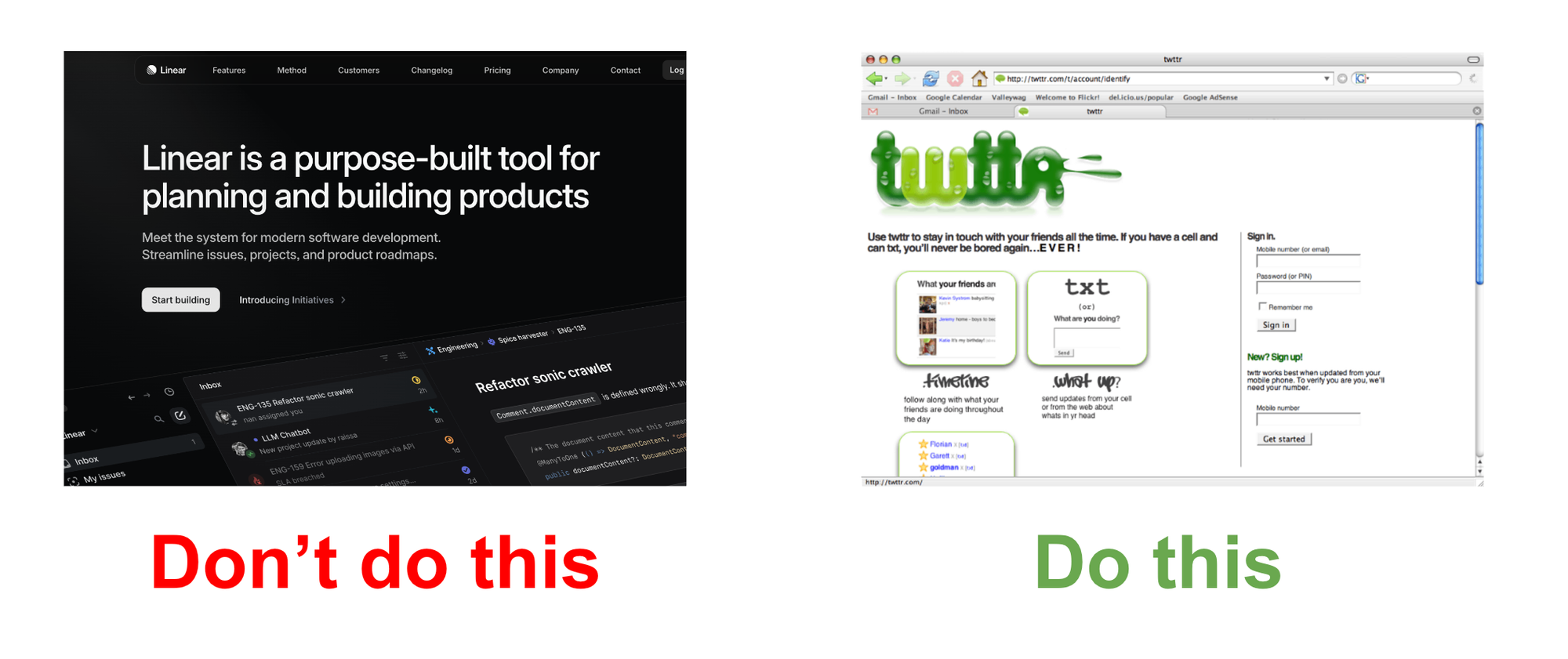
You really don’t need a fancy website when you’re starting out.
As a matter of fact, you don’t need a website at all.
People like Alex West (maker of cyberleads.com) started his business using just Google Sheets — and made their first sales with it!
So there is no shame in having a simple Notion page instead of a fancy Webflow landing page.
If you want to have one, keep it as simple as possible. Go through this post and see what the first pages of Twitter, Facebook, and Airbnb looked like… they as simple as it gets.
The purpose of a website
The goal of the website is to generate signups, which you can then turn into revenue.
Forget concepts like brand before you make at least $1M a year. It will only distract you from what matters.
Your first customers are the early adopters. People who were really hoping for someone to do what you did.
Making them sign up and pay should be easy, even with the ugliest website in the world. So don’t sweat the design and just start with something simple. Making a beautiful website at this point is a waste of time.
Can't get customers, get emails
If you can’t get people to sign up and purchase your product right away, it’s OK.
Getting someone’s email is still extremely valuable.
As the old marketing adage goes: The money is in the list. What this means is that when you have a list of emails from people who are interested in your product, it’s only a matter of time before you turn them into customers.
Why is email so valuable? There are three things:
- Virtually everyone checks their e-mail
- Most people get their e-mail delivered chronologically
- The cost of sending an email is basically zero
When you send an email you reach a good audience, when they pay attention, and it costs you nothing. There is nothing else that can get you this silver bullet.
Sidenote: Socials vs SEO vs Email
But isn’t social like Instagram, Twitter, or good SEO organic traffic the same?
With social accounts and even SEO, you're at the mercy of either Meta or Google and their algorithms.
You can build your social media following, but then Meta publishes a change and suddenly no one sees your posts.
When you simply post something that’s not trending well with your followers, the algorithm will limit who it reaches. Even with 100k followers, you can get posts that reach just 20% of them.
SEO is quite similar, you can’t really influence how well you do in the long-run, and there is no guarantee that your new posts will rank as well as the old once.
You’re again at the mercy of an algorithm.
With email, you will instantly get to every single one of your subscribers and catch them in a place where they work every day.
Even if some unsubscribe, or don’t open your email, the deliverability and stability is still unmatched.
The perfect layout
The Internet is full of interesting things and people have millions of other websites to go to. If they can't figure out what you do in the first 5 seconds, they'll leave.
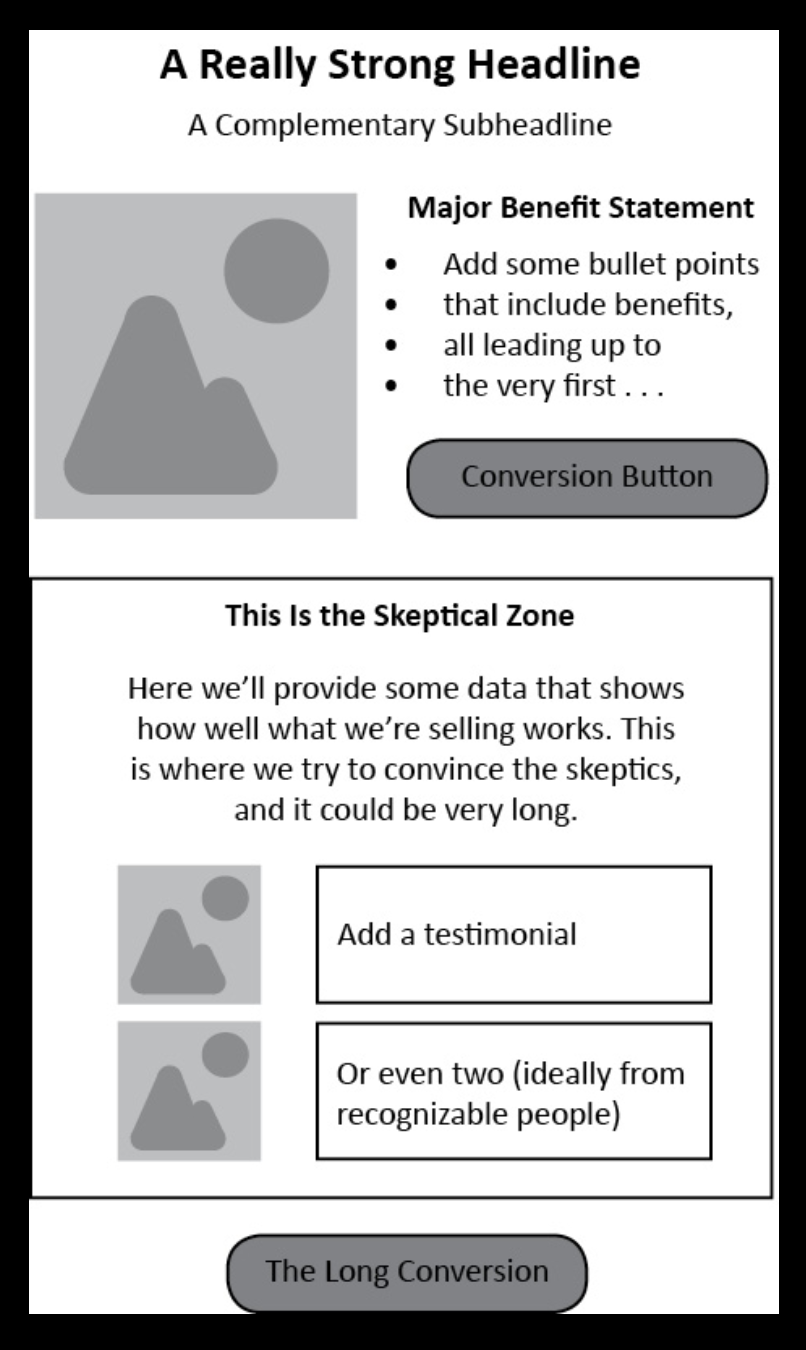
- Headline
Start with a simple explanation of what your product does so a five-year-old can understand it. Be as specific as possible.
If you're selling hand-crafted honey online say: "We made honey in our garden and ship it directly to you."Don't use any slogans like "Honey reimagined". If you're selling a simple to-do app that lets you get a Pokemon when you finish a task say "Finish tasks and catch Pokemon".
Cliche words to avoid
All-in-one, Best-in-class, Innovative, User-Friendly, Next-Generation, Revolutionary, World-Class, Cutting-Edge, Disruptive, State-of-the-Art etc.
- Subheadline
Support the headline. It gives you 2 extra sentences to add a little more context and information to it.
Most people skip subheadlines when skimming a landing page so you don't have to sweat this one.
- Call to action
This is the reason why you have the website in the first place. What is the number one most valuable thing you want to get from visitors?
Ask for signup, order, download, subscribe with email, or book a demo. Simplicity is king here. Don't throw visitors off weird asks.
The goal of the whole website is to make visitors do this action. So make it a good one.
- Benefits overview
Explain the problem that you solve here in detail. Showcase benefits like you can do a,b, and c with this product.
Pick only the strongest benefits, that will resonate with most visitors. If competing with existing solutions, focus first on how you are different.
Stick to a maximum of three benefits headlines and support them with short subheadlines.
- Testimonials and data
Here you will convert the skeptics. Try to get as much data visuals with charts going up, or testimonials from real people that say this really works.
Video testimonials work the best. For written once make sure they look as legit as possible. There are too many fake reviews with AI headshots and even worse names like Jimmy Goodprice.
- Pricing
People won't buy if you don't tell them the price. Be honest here. If you've done a good job with the points above, they'll buy.
Metrics to follow
You don't need to measure things when you don't have customers. This is more to track your progress and that you feel good about yourself.
- Visitors: how many people you’re getting to see your product
- Signups: how well do you convert them to buy
- Traffic sources: spot new channels that send you visitors
Don't spend much time here. Tools like Google Analytics or Plausible do a great job.
Read more
- Kevin Hale: How to Improve Conversion Rates (18min)